-

High-Pressure Polymorphs: What Ringwoodite and Bridgmanite Reveal About the Transition Zone
Diamond inclusion mineral physics, the 410 and 660 km discontinuities, and deep mantle water storage in wadsleyite and ringwoodite.
• •3–4 minutes -

Tidal Dissipation and Lunar Recession: The Long-Term Slowing of Terrestrial Rotation
Oceanic friction, lunar laser ranging (LLR), tidal bulges, and the evolution of Earth's length of day across Precambrian tidal rhythmites.
• •3–4 minutes -
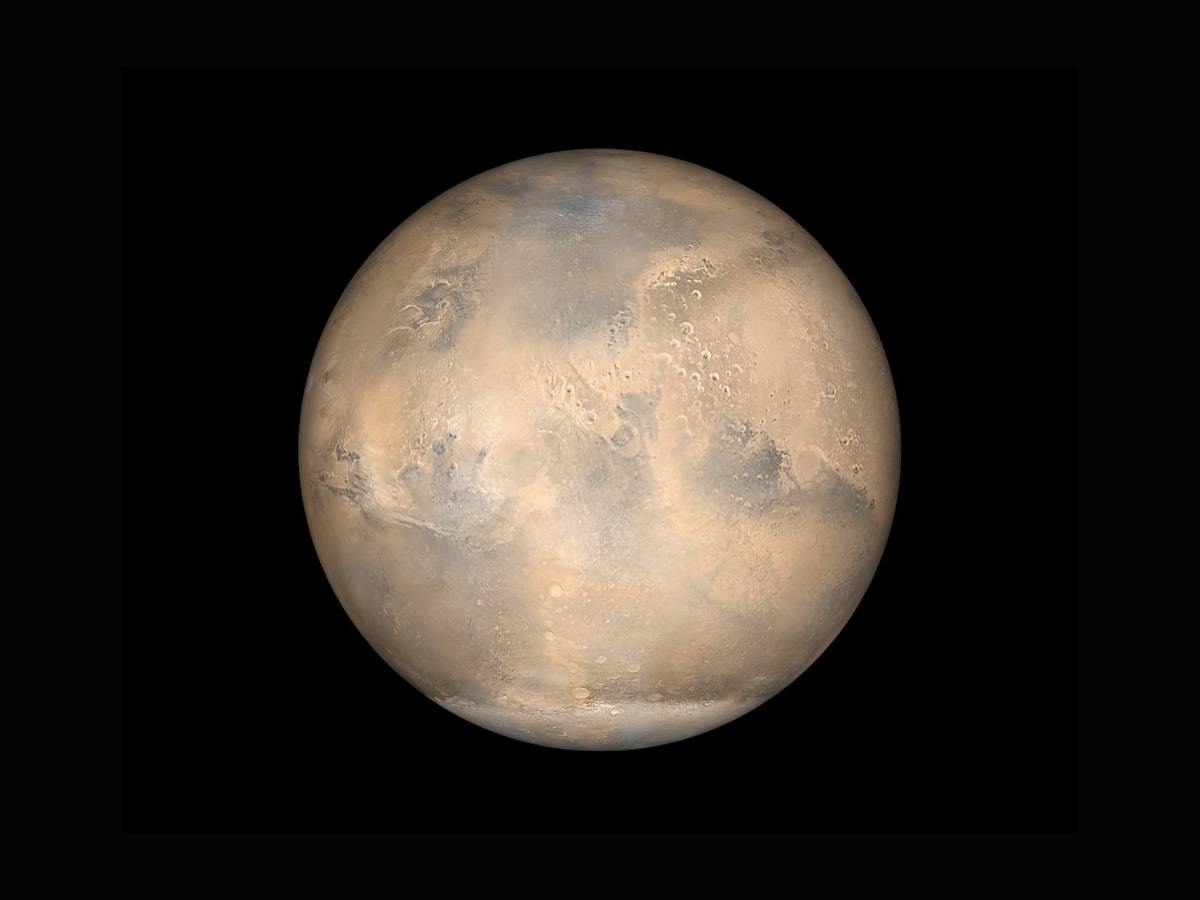
Comparative Planetary Magnetospheres: Why Earth Retained Its Field While Mars Froze
Core crystallization regimes, mantle convection cooling efficiency, and atmospheric stripping mechanisms dictating magnetic field longevity on terrestrial planets.
• •3–4 minutes -

Seismic Anisotropy in the D” Layer: Mapping the Mysterious Core-Mantle Boundary
Post-perovskite phase transitions, lattice preferred orientation (LPO), and shear-wave splitting at Earth's basal thermal boundary layer.
• •3–4 minutes -

True Polar Wander: Rotational Instabilities Shifting Earth’s Mantle Relative to its Axis
Moment of inertia tensor perturbation, mass distribution anomalies, and the viscoelastic reorientation of the solid Earth relative to the spin…
• •3–4 minutes -
Geodynamo Mechanics: How Liquid Iron Turbulence Generates the Geomagnetic Field
Magnetohydrodynamic induction in Earth's outer core, compositional convection from inner core crystallization, and Coriolis-driven helical columnar turbulence.
• •3–5 minutes -

Rifting Dynamics: Mechanical Stretching and Volcanism in the East African Rift System
McKenzie pure-shear stretching, magmatic strain localization, and mantle plume interaction governing the active continental rifting of East Africa.
• •3–4 minutes -

Orogenic Collapse: Why Mountains Stop Growing and How Gravitational Spreading Works
Gravitational potential energy thresholds, thermal weakening of overthickened crust, and metamorphic core complex exhumation during late-stage orogenic collapse.
• •3–4 minutes -
Cratonic Keels: The Billion-Year Mechanics Keeping Continental Cores Buoyant
Isopycnic stability hypothesis, chemical depletion rheology, and dehydration stiffening that preserve Archean cratonic roots against mantle convective erosion.
• •3–4 minutes -

Subduction Zone Seismicity: The Physics of Megathrust Earthquakes along the Pacific Rim
Rate-and-state friction mechanics, pore-fluid overpressure in the seismogenic zone, and viscoelastic rupture propagation during giant Mw 9+ megathrust events.
• •3–5 minutes
Trending Earth Scales
- Isostatic Rebound: Viscoelastic Mantle Relaxation Following the Last Glacial Maximum

- High-Pressure Polymorphs: What Ringwoodite and Bridgmanite Reveal About the Transition Zone

- Serpentinization at Mid-Ocean Ridges: Abiotic Hydrogen Generation and Deep Sea Vents

- Metamorphic Dehydration: How Bound Water Escapes Crustal Slabs to Trigger Volcanism